Big Changes
Why we shifted things around at our Oakley pizzeria

“Most newsletter suck. This one doesn’t” - an anonymous real reader of this newsletter
Committed to 100% AI-free writing (for better or worse when it comes to spellcheck — sorry, mom and dad).
Why We Changed How You Order at Our Oakley Pizzeria
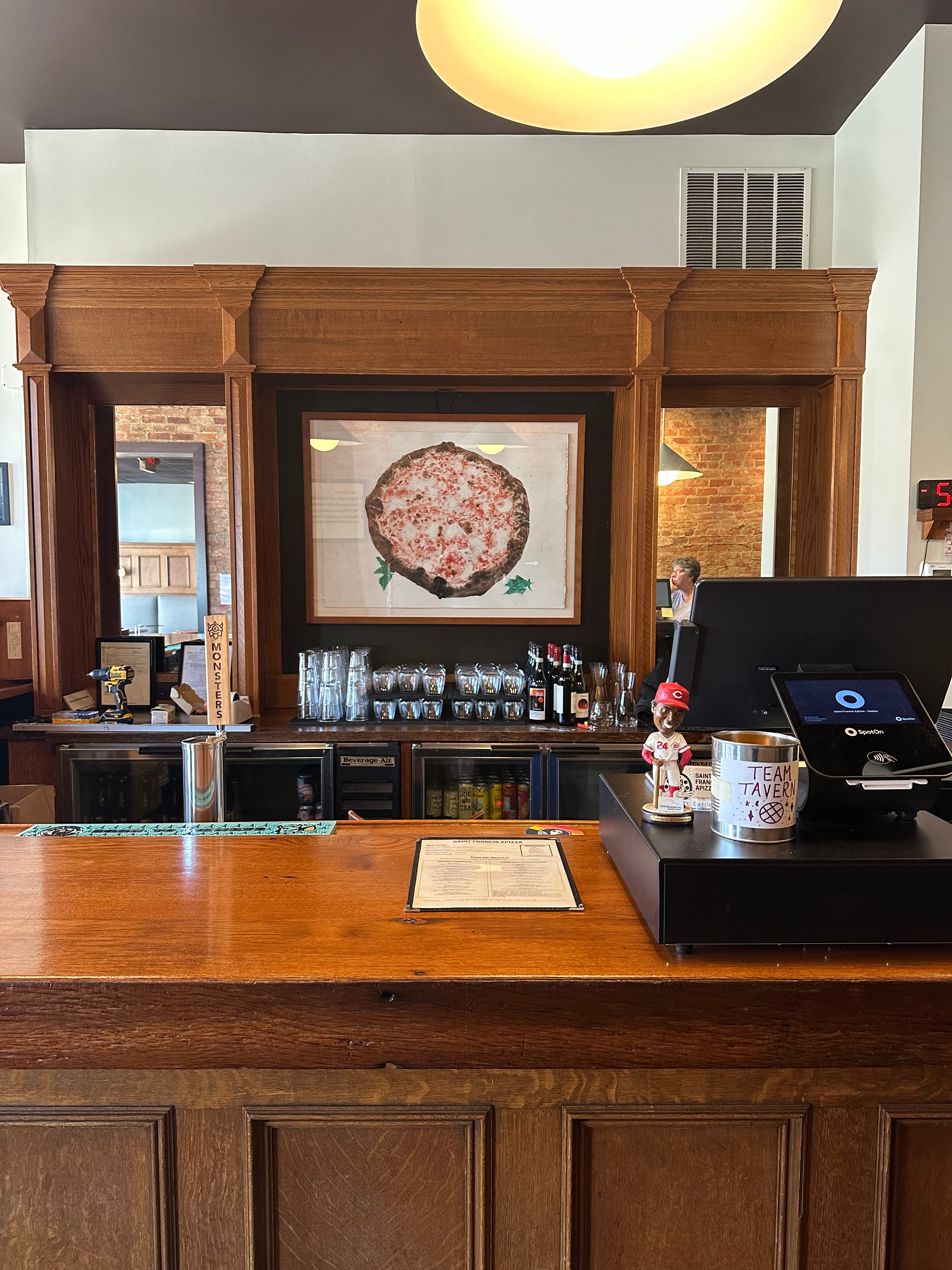
We started having guests order their dine-in food and drinks at the counter, beginning in May. Our staff still brings your order to your table. Guests place their order with a real, friendly person, not on a kiosk or anything, and there sure as hell aren’t QR codes involved.
This is how the pizzeria was set up when we initially opened nine months ago. I planned it as a counter-service business. My vision for the dine-in spot was more casual and less traditional Front of House — FOH — than it became within a few months of opening. We quickly switched to full-service after opening because that seemed like a good idea at a time, and it was for awhile.
But then we found ourselves on a 45 min - 1 hour wait at peak times. Since we made this change to our ordering process, there is virtually no wait to order and be seated now (and business is the same). Long waits, and fewer table ‘turns’ work great for a restaurant with multiple courses and high check averages. But that was never what we set out to do.
Changing course dramatically like this is hard on everyone: on some of our staff, who had gotten used to running the restaurant artfully within the framework of full-service; on a portion of our guests, some of whom might’ve felt surprised and a little miffed when we asked them to order at the counter before finding a table, and have shared that with me in the past few weeks.
So then, why? Why was this switch worth doing? Was it necessary?
Saint Francis Apizza is about two things at its core: 1) excellent pizza, and 2) kind, friendly people. We have whittled this down over the years, gaining more clarity with every passing month. Let’s start with the hospitality tenet, which I’ll sometimes describe as kindness — our leading hospitality characteristic.
Some elements of a traditional full-service model help facilitate kind, friendly service. Our staff was especially clear with me about their concern about this, in some cases disagreeing to the point that they unfortunately chose to work elsewhere. How can we be about hospitality if we don’t have a traditional ‘server’ attending to each table, each guest? Not to mention what this change will do to our tip rate.
Not coming up in fine-dining or even front of house roles as much as back of house, or cooking/baking, I’m very open-minded about the idea that hospitality can come from roles other than ‘server.’ But I do appreciate the point. Our restaurant can’t and won’t feel like we’re just trying to get your money and be done with it.
Taking care of people means caring, and not taking for granted, that they’ve chosen to walk in to your business. It means giving a damn that they leave happy and satisfied. That is what hospitality means to me. It’s the opposite of transactional.
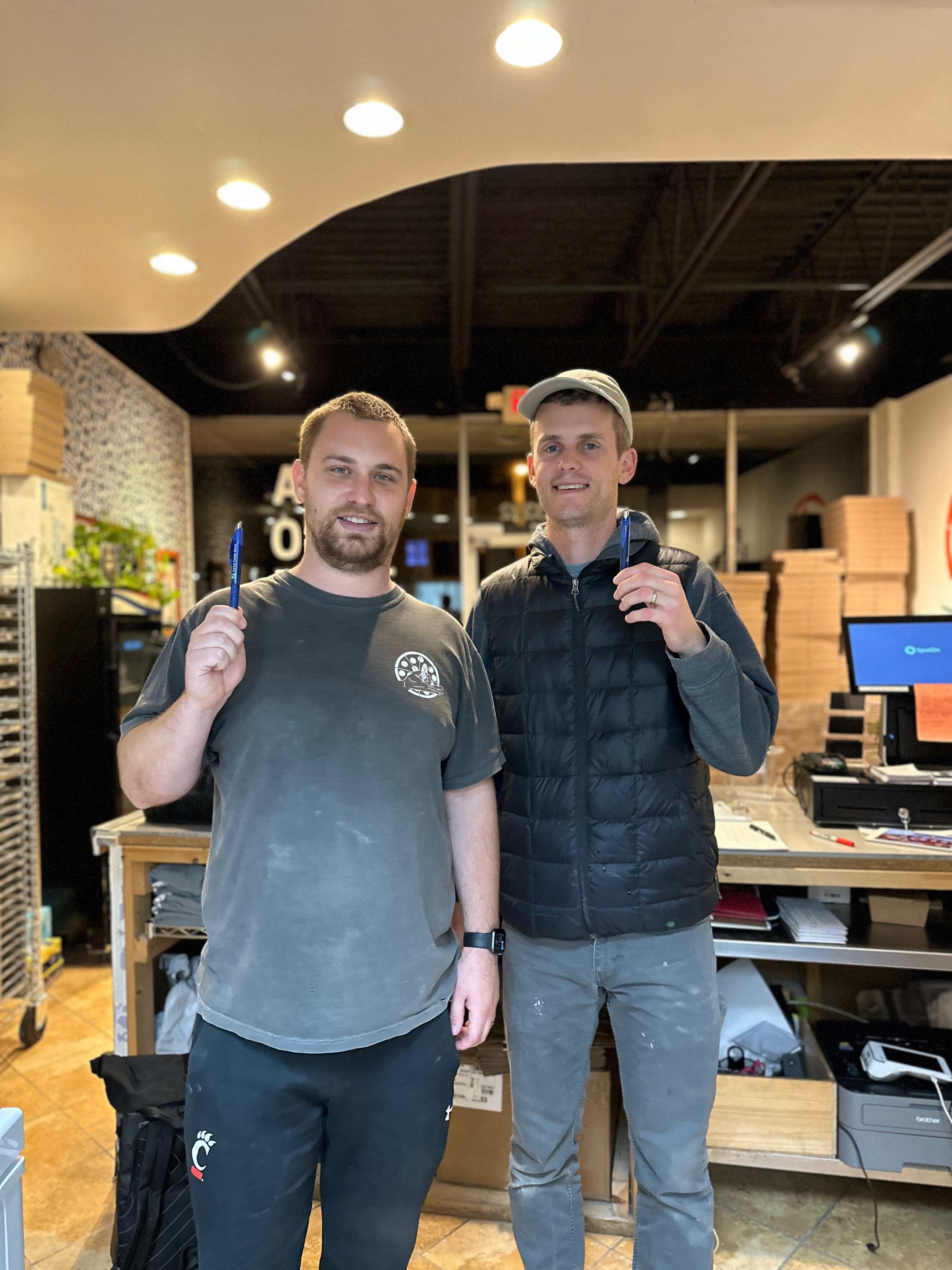
Eric, our Front of House Lead at our original Hyde Park carry-out only pizzeria, really showed me that hospitality can blossom in any model. When I hired Eric, I remember saying that he would make friends with strangers on an airplane or at a wedding reception where he didn’t know anyone. Almost half the reviews we get at our Hyde Park location, on Google, Yelp, etc., and including anecdotal ones, mention the friendly people at the counter. We’re a takeout place where there’s maybe 60 seconds to make an impression. Eric could think of himself as a cashier, an order taker, etc. But in the simplest interactions, day after day, he’s cemented our cultural identity as ‘friendly,’ and played a huge part in the positive trajectory of that little carryout restaurant. (So grateful to work with you, Lilly!)
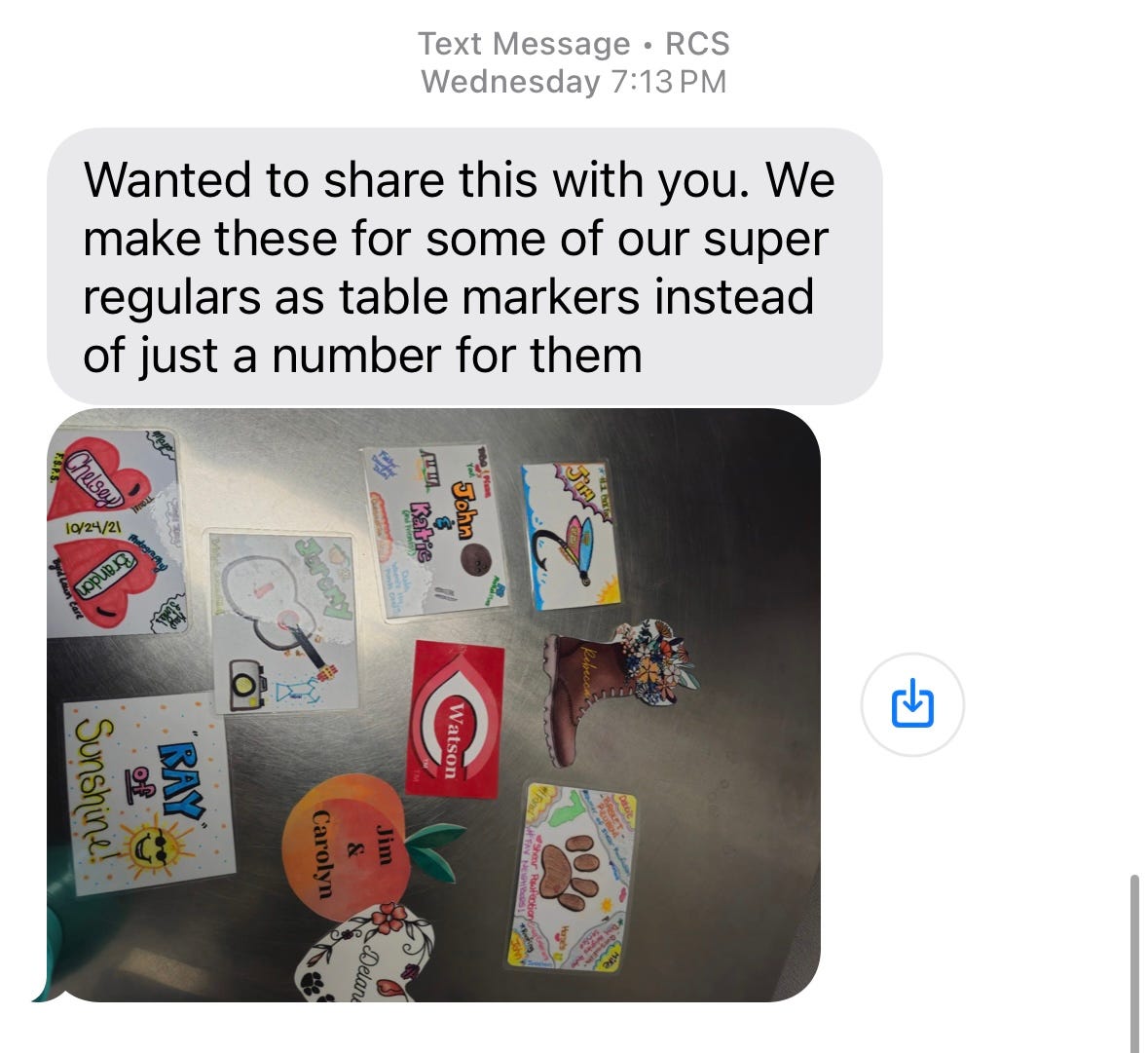
Josh House, who with his wife owns Pickles and Bones, the incredible gem of a counter-service BBQ restaurant in Milford, and recently started a Substack of his own, sent me a picture (above) of special table numbers his staff made for regular customers they’ve especially gotten to know and connect with. I’ve collected these moments and ideas over the years. Another is source of inspiration is Birdie’s, a nationally recognized restaurant in Austin, which I think is fair to call fine-dining, but also a hybrid counter service model. The hospitality there is in fact award-winning. The team at Birdie’s seem to spend most of their time coming up with ways to communicate more genuine warmth and friendliness (see below for what a food runner gave me when he learned I was visiting from out of town).
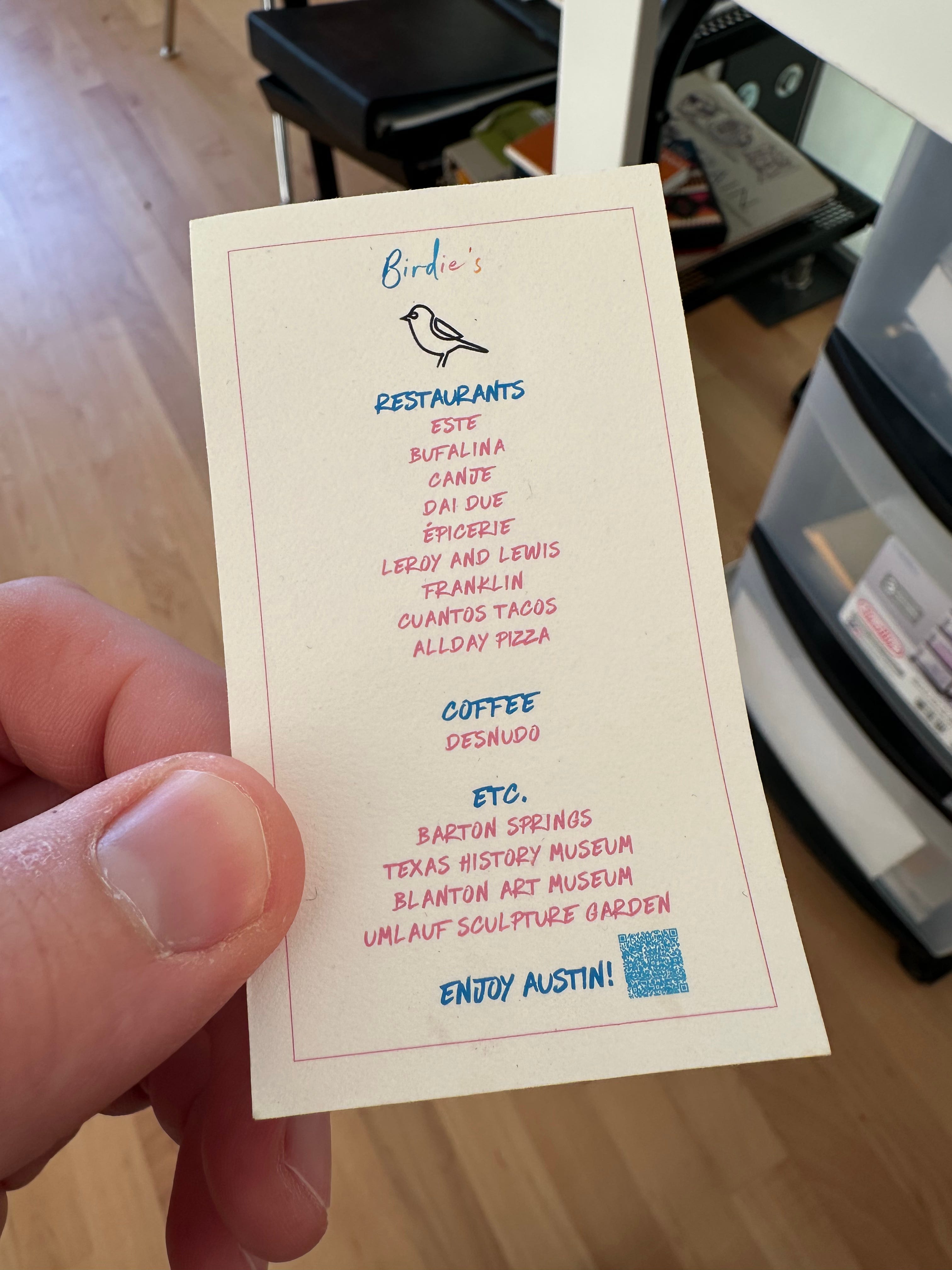
I also think about the time someone on our FOH staff learned that some of our guests had just come to us from the Sunday farmers market nearby, where they’d picked up some of our frozen pizzas, now probably thawing in their car parked outside. It made me so happy and proud of our team to watch her genuine excitement that they’d found our dine-in restaurant after just learning about our frozen pizzas an hour before. Then, her natural kindness and concern for taking care of others kicked in. She offered to let them bring their frozen pizzas inside, where we could store them in our freezer throughout their meal. What an incredibly thoughtful act of hospitality.
Can moments like these, true acts of kindness that define our type of restaurant hospitality still happen when a server isn’t waiting on their table? I wholeheartedly believe it can.
Of course, it all comes down to how we treat every interaction, because any and all interactions can be rushed, phoned in, or slowed down and full of presence.
I’ve been inspired by my favorite BBQ restaurants in Texas, which I wrote about two years ago when cultivating my original inspiration for SFA Oakley. Anyone who has worked in a popular, in-demand restaurant, or made/sold anything in any industry that is highly sought after, knows that it’s easy to lose that sense of awe and gratitude that someone wants what you’re providing (see every airline in America). But down in Texas, you get to the front of the BBQ line at Franklin or La Barbecue, and they treat you like you’ve just been rescued from a desert island and they couldn’t be more pleased you’re standing in front of them. Free samples? Absolutely. Take all the time you need to decide (to be fair, how would I not have decided after waiting in line for at least an hour?). Brown Bear Bakery, one of our pioneer turned long-term staples here in Cincinnati, is also a shining example locally. Even on a Saturday morning it feels like the person taking your order is completely unaware that there are 40 people in line, and I mean that in the best way possible. In that moment, taking care of you is all the staff member is focused on. It feels very personal and intimate.
These are elements we’ve carried through to ‘counter service.’ We genuinely appreciate that you are here. We’ll speak to you in a natural, conversational way that makes sure it feels like more than a transaction. We’ll be happy to give you all the time you need.
More important info
We made this change without laying anyone off to save the business money. We didn’t reduce anyone’s hours. We’re still what I’ll call a ‘high touch’ counter-service restaurant, with enough people ‘on’ at all times to ensure each guest is well cared for and our team doesn’t feel overwhelmed. We continue to pay everyone well above tipped minimum wage, offer health insurance and retirement savings plan with a company match, and two work weeks paid time off. That was an expensive commitment I believe in 100%, and by adjusting our model financially I have the best chance to help protect that.
We expanded our hours significantly at SFA Oakley — we’re newly open on Tuesdays, and open for lunch at 11:30 throughout the week and weekend — and spreading our team’s scheduled time across more periods when we have potential to bring in sales.
So now we turn all of our focus to making the guest experience, from a crystal clear ordering process to more and better drink options, better than it was a month ago, and better than when we first opened.
Personally
I already feel more at home in our restaurant. It is closer to what I set out to create.
In college, I majored in English. My favorite professor and mentor taught me this method of evaluating art, whether the form is film, a novel, or a painting: what did the artist set out to achieve when making this work of art? How close did they come to realizing that vision in the final version that was presented to the world? In other words, you’re not just asking yourself, ‘Do I like this?’, as that’s a legitimate question but not necessarily the same as ‘Is this good.’
Not everyone will prefer this version of SFA Oakley, and they will wish we’d set out to achieve something different, or never deviated from the previous direction we were on. This is not something I take lightly. As I wrote a few months ago here, I will never stop watching/listening for, and especially, CARING about how guests feel about every aspect of our business. The moment we reactively dismiss feedback and say, ‘They [guest/customer] don’t know what they’re talking about” is the beginning of the end.
And at the same time, it’s my role to serve as a filter for some amount of the ‘feedback’. I have a vision for this business, which is shared by our team. We will get the most out of working to get closer to realizing it for the restaurant. Like those works of art I pulled all-nighters writing about in school, the critical question for me about SFA is, ‘How close are we to realizing that vision in the final version that was presented to the world?’
I came across Seth Godin’s writing a long time ago and have been coming back to it ever since. Earlier this year he wrote the following on his blog. It’s been giving me a measure of peace ever since.
“Nothing important is for everyone.
When we encounter a thoughtful critic, we need to quickly understand who is speaking to us.
If the work we made was intended for someone just like this, and they don’t like it, we need to do a better job next time. The criticism will help us understand how to improve.
But if the work we made wasn’t for someone with the hopes, needs and expectations of the person we’re hearing from, we can forgive ourselves (and them) by acknowledging who it’s for and why.”
You can reach me at the email address below. I prefer communicating directly via email than reading through the comments.
Thank you for reading this and engaging with my thought process!
Thank you for reading, and thank you for trusting us with your pizza needs!
There is no charge for this newsletter, but if you’re hungry, we’ll make you a pizza tonight, tomorrow, or any night…
- Alex Plattner, Saint Francis Apizza
alex@saintfrancisapizza.com